Preserving an audio CD as WAV/CUE
WAV stores the extracted CD-DA PCM; a CUE sheet records how that continuous audio is divided and authored.
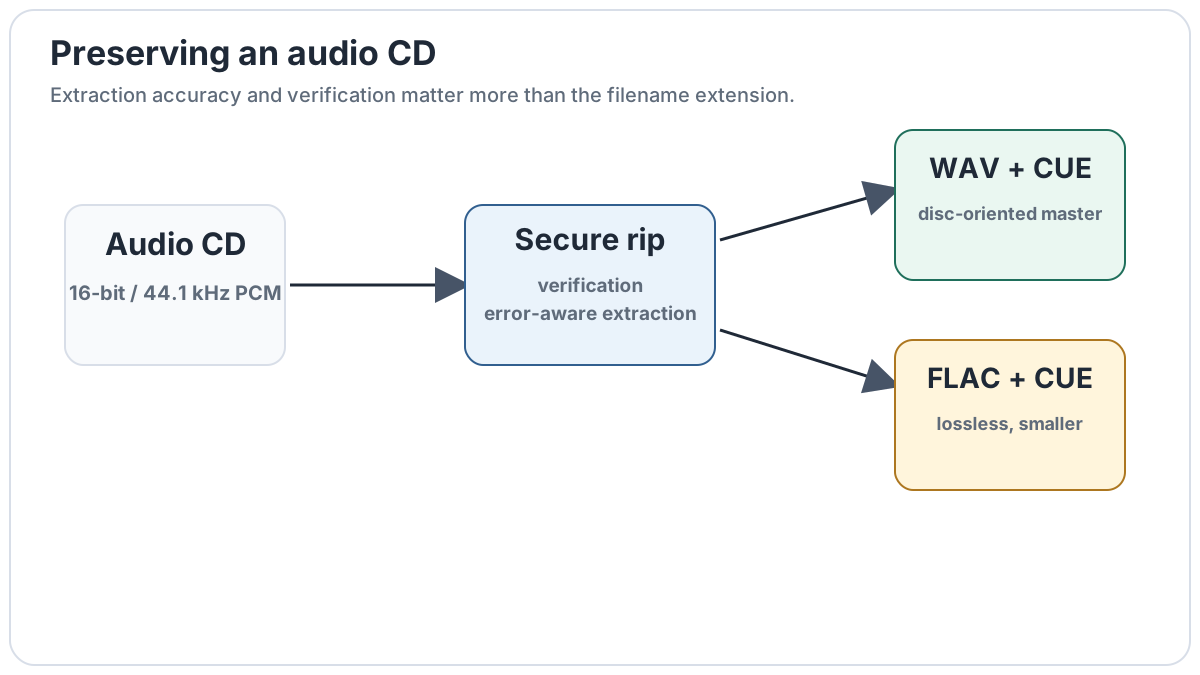
What it preserves
Standard audio CD audio is stereo PCM at 16-bit / 44.1 kHz. A single WAV image can store that extracted PCM without lossy compression. A CUE sheet can describe track positions, gaps, indexes and additional disc information supported by the extraction software.
Bit-perfect extraction
WAV itself does not make a rip accurate. Accuracy comes from the extraction process: correct drive offsets, secure reading and verification such as AccurateRip where available. The goal is for the extracted PCM samples to match the disc data, not merely to produce a file called .wav.
What the CUE sheet adds
A CUE sheet can preserve track boundaries and pregap/index information that a single audio file cannot express on its own. Exact Audio Copy can generate CUE sheets containing gaps, indexes, track attributes, UPC/ISRC information and CD-Text where available.
What it does not guarantee
A WAV/CUE pair is not a sector-for-sector optical-disc image. Some subchannel information, enhanced-CD data sessions, unusual copy-protection behavior or other non-audio structures may require different preservation methods. Its strength is a clear representation of the CD audio program and its layout.
Could FLAC be used instead?
Yes. FLAC can preserve the PCM samples losslessly and reduce storage size. Some users still prefer WAV/CUE for a disc-image workflow because the representation is simple and directly PCM-based. The important distinction is lossless preservation versus the particular container used for that lossless data.