Why DTS-CD can be preserved in FLAC
DTS-CD is a useful reminder that data which looks like 16-bit / 44.1 kHz PCM to a CD player can actually carry a compressed multichannel bitstream.
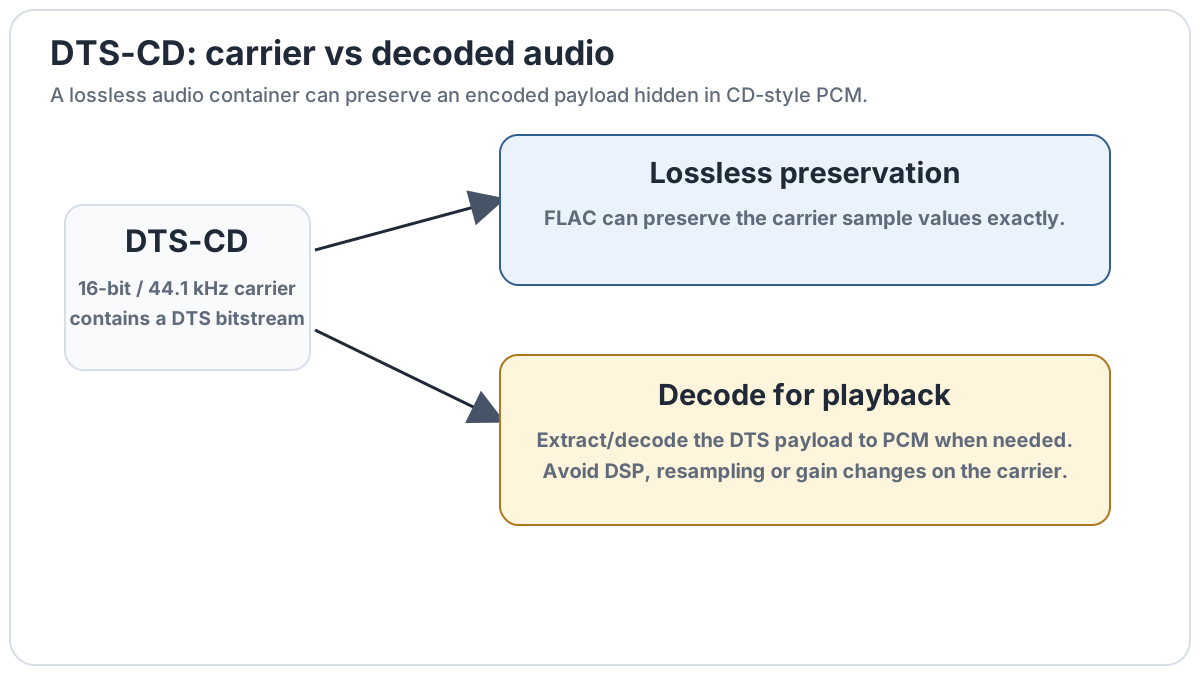
How DTS-CD works
A DTS-CD is authored so a normal CD transport can read a 16-bit / 44.1 kHz stereo-looking stream at the normal CD data rate. The sample words actually carry DTS-encoded data. When passed unchanged over a compatible digital path, a DTS decoder can recognize and decode the multichannel payload.
Why FLAC can preserve it
FLAC does not need to understand the musical meaning of the sample words. It losslessly stores the 16-bit sample values and recreates them exactly on decode. If the original DTS-CD carrier is extracted bit-perfectly and then FLAC-compressed without DSP, the DTS payload can therefore remain intact.
The FLAC is not ordinary music PCM
Bit-perfect playback matters
The preserved bitstream must reach the DTS decoder unchanged. A player that resamples, changes volume in the sample domain, applies ReplayGain, mixes channels or otherwise alters samples can destroy the encoded data.
What can corrupt it
- Resampling 44.1 kHz to another rate.
- PCM volume changes or normalization.
- Crossfades, EQ or other DSP.
- Lossy re-encoding.
- Software that auto-decodes DTS before creating the supposed preservation copy.