Full-disc ISO vs MKV remux
Both can preserve original encoded media, but they preserve different levels of the source.
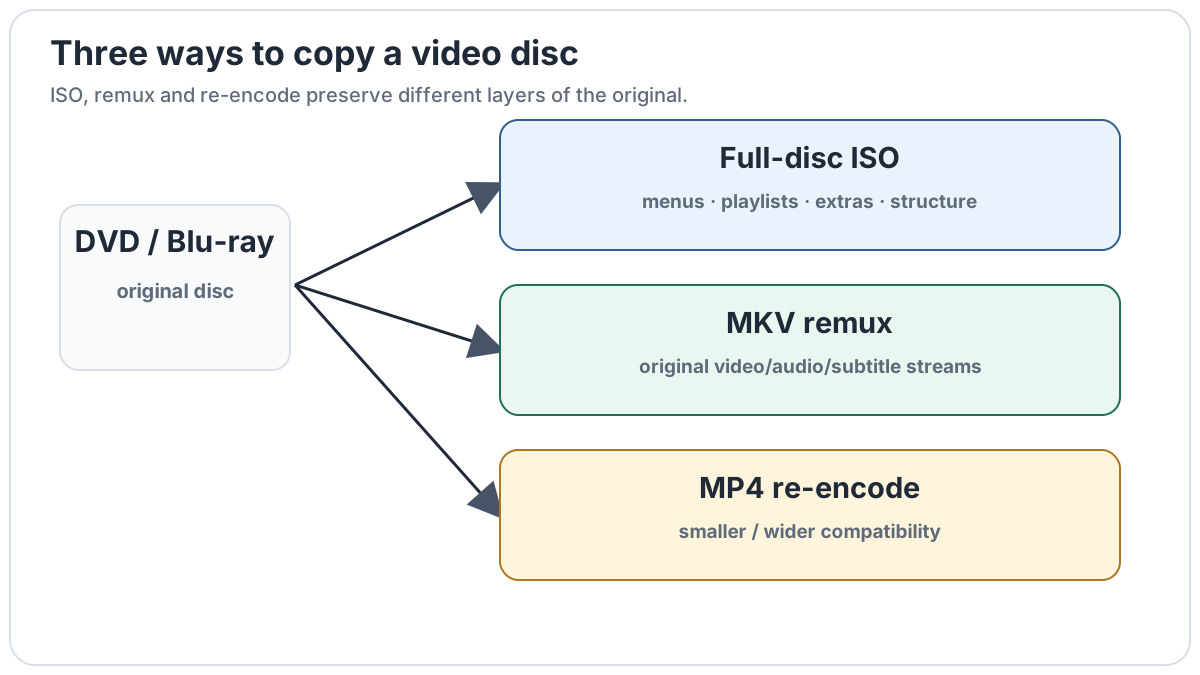
The key difference
A full-disc image attempts to preserve the authored disc as a disc: filesystem, playlists, menus, branching, extras and related structures. An MKV remux usually preserves selected media streams—video, audio and subtitles—inside a new container.
Full-disc image
This is the better conceptual choice when menus, alternate cuts, playlists, multi-angle authoring, extras or the original navigation structure matter. The cost is a larger and less portable object that generally needs disc-aware playback software.
MKV remux
An MKV remux is often more convenient for a media library. Original AVC/HEVC video, TrueHD/DTS-HD audio and subtitle streams can be copied without re-encoding, while unwanted languages or extras can be omitted. Matroska also supports chapters, multiple tracks and rich metadata, but it does not recreate every disc-authoring feature automatically.
Does either change quality?
Not necessarily. If an MKV remux copies the original encoded video and audio streams, their codec payload can remain unchanged. The difference from the ISO is then structural rather than a video-quality difference.
Which one fits the goal?
| Priority | Better fit |
|---|---|
| Preserve the authored disc object | Full-disc image |
| Keep main feature streams unchanged | MKV remux |
| Menus / branching / disc navigation | Full-disc image |
| Convenient media-server library | MKV remux |