Why preserve an SACD as an ISO?
An SACD ISO keeps the high-resolution disc image as a single source object, from which stereo or multichannel DSD tracks can later be extracted.
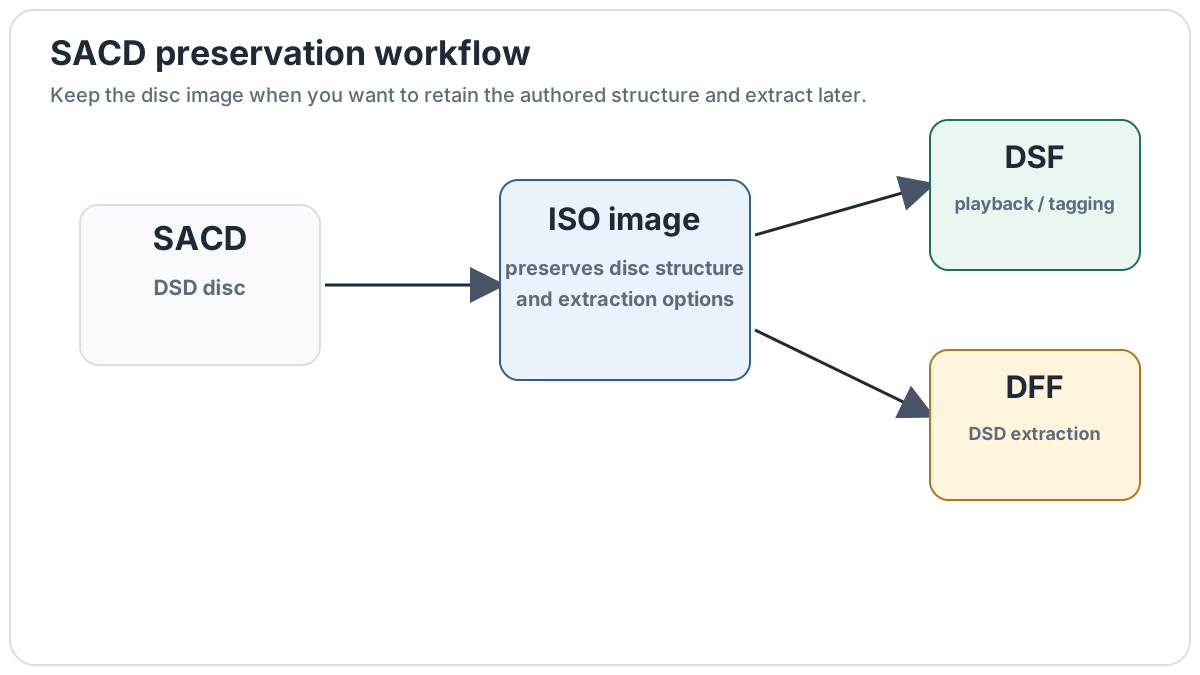
What the ISO represents
In SACD preservation workflows, an ISO is a raw image of the SACD high-resolution disc data. Tools in the SACD ecosystem can use that image as an input and later extract stereo or multichannel material to DSF or DSDIFF.
Why keep it
Keeping the disc image retains the source in a form closer to the authored SACD structure instead of immediately reducing it to a set of standalone tracks. That is useful if you later want a different extraction layout, stereo versus multichannel material, or a new playback format.
ISO vs DSF/DFF tracks
| Form | Best suited to |
|---|---|
| SACD ISO | Preserving the disc image as the master source |
| DSF | Individual DSD tracks with practical metadata support |
| DFF/DSDIFF | DSD interchange and specialist workflows |
DSD and DST
SACD material may use raw DSD or DST lossless compression for multichannel data. A disc-image workflow can retain the source representation, while later extraction tools may optionally convert DST back to DSD.