Frame rate, CFR, VFR and time base
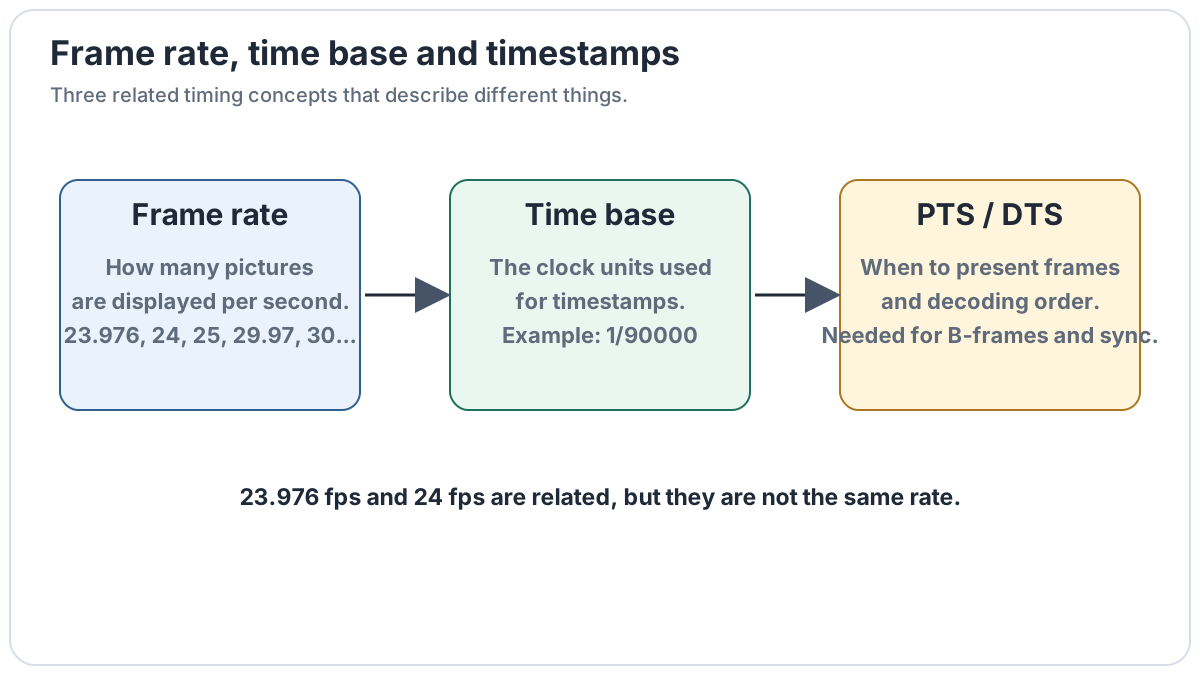
Frame rate describes how frequently pictures are presented. Media files also carry timestamps, and the clock used to express those timestamps is often called a time base. Those concepts are related, but they are not the same thing.
What frame rate means
Common rates include 24, 25, 30, 50 and 60 frames per second, plus fractional broadcast-derived rates such as 23.976, 29.97 and 59.94. Higher frame rates can represent motion more frequently, but do not by themselves guarantee better picture quality.
| Nominal name | Exact/common rate | Typical context |
|---|---|---|
| 24p | 24 fps | Cinema and true-24 digital production |
| 23.976p | 24000/1001 ≈ 23.976 | NTSC-derived film/video workflows |
| 25p | 25 fps | 50 Hz television regions |
| 29.97p/i | 30000/1001 ≈ 29.970 | NTSC-derived television/video |
| 50p | 50 fps | High-motion 50 Hz workflows |
| 59.94p | 60000/1001 ≈ 59.940 | NTSC-derived high-frame-rate video |
Why 23.976 and 29.97 exist
The familiar 1000/1001 rates come from colour NTSC-era timing compromises. Modern digital systems inherited those rates for compatibility, which is why software often distinguishes 24 from 23.976 and 30 from 29.97.
Treating them as identical can cause long-duration sync or timing errors even though the numerical difference looks tiny.
Constant versus variable frame rate
| Mode | Meaning | Typical use |
|---|---|---|
| CFR | Frames follow a regular presentation cadence. | Broadcast, editing, many camera and delivery workflows. |
| VFR | Intervals between presented frames may vary. | Phones, screen capture, conferencing and content that benefits from avoiding redundant frames. |
VFR does not mean “bad” or “broken.” It means timestamps, rather than one fixed cadence, are essential to correct playback.
Time base, PTS and DTS
Compressed video often uses timestamps to say when a frame should be decoded and presented. PTS is commonly the presentation timestamp; DTS is commonly the decoding timestamp. They can differ when frames are decoded in a different order from display order, as happens with B-frames.
A time base is the unit used for those timestamp values. It is not necessarily “1 divided by the frame rate.” Containers and streams may use convenient clock scales independent of presentation cadence.
Common confusion
The exact 24000/1001 rate matters over long durations.
Inter-frame codecs may describe many pictures partly from neighbouring pictures.
It is a timing scale, not a measure of compressed data per second.